Getting to know Jesus · Lesson 5
Passover. The Blood of the Lamb on the Door, and the Death That Passed Over
Listen to the lesson in Thai
Audio loads when you press play.
Read the passage first
Read Exodus 12:1–13, then Exodus 12:21–30. If you have time, add one more verse, Exodus 12:46. We will use it at the end of the lesson.
Before you read, here is a little of what happens between the last lesson and this one. Abraham's descendants moved to Egypt, grew into a large nation called Israel, and were then forced into slavery for hundreds of years. God sent a man named Moses to tell Pharaoh, the king of Egypt, to let them go. Pharaoh refused. God sent nine plagues, and Pharaoh still refused. Chapter 12 is the tenth and final plague.
What happens in this passage
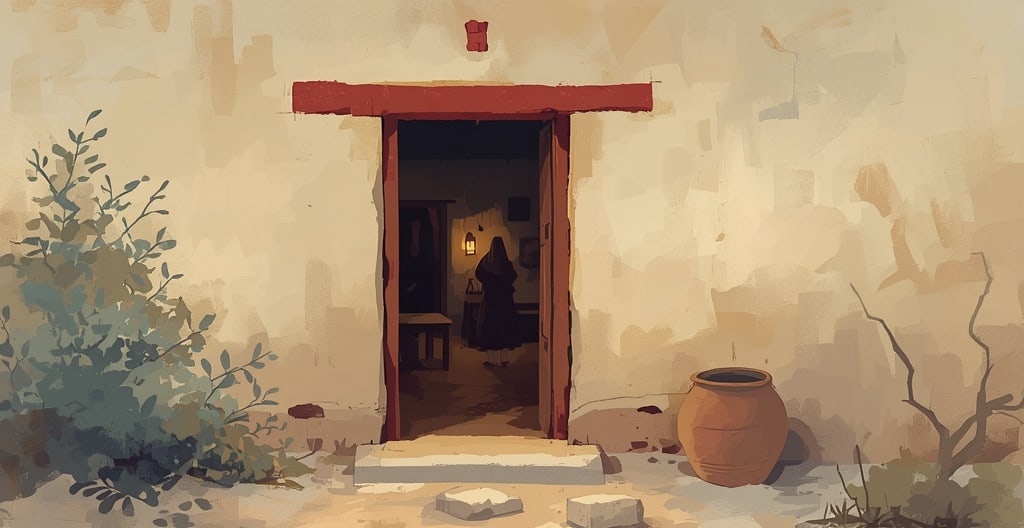
Instructions before the night (12:1 to 11). God tells Moses in advance that on one night death will pass through all of Egypt, and the firstborn son of every house will die. But before that night, he gives the people of Israel detailed instructions. Each family is to choose a lamb. It must be male, a year old, and without blemish: not lame, not sick, nothing wrong with it. They keep it in the house for four days (imagine the children in the house growing attached to it). Then on the evening of the appointed day they kill the lamb, put its blood on both sides and the top of the doorframe, and roast the meat and eat it together as a family that night.
The death that passed over (12:12 to 13 and 21 to 30). God says plainly that the blood on the door will be a sign. When he sees the blood he will pass over that house, and death will not touch anyone inside. And that night it happens exactly so. All over Egypt there is weeping, from Pharaoh's palace to the prisoner's cell. But in the houses with blood on the door, no one dies at all. That morning Pharaoh lets Israel go, after hundreds of years of slavery.
The word Passover (ปัสกา) comes from here. It means to pass over, or pass by. God commands Israel to celebrate this night every year forever, so that every generation remembers how God rescued them from slavery. Jewish people still celebrate Passover today, more than three thousand years later.
What to notice. Safety that night did not depend on how good the people in the house were. It did not depend on who prayed more, or who was a better Israelite than the neighbors. It depended on one thing only: whether the blood of the lamb was on the door. A house of good people with no blood was not safe. A house of people who knew they were not good enough, but trusted God and put the blood on the door, was safe.
Notice too that the people inside could not see the blood. It was on the outside of the door. The one who saw it was God. They simply trusted that God meant what he said, and sat inside the house.
And notice one more thing. The lamb that died was without blemish, while the people in the house were full of blemishes. A perfect life died in place of imperfect people. We saw this picture already with Abraham's ram. Now it widens from one family to a whole nation.
How this points to Jesus
About fifteen hundred years later, Passover happens again, and this time it is the real thing.
- Jesus died at Passover. Every year large numbers of Jewish people brought lambs to Jerusalem to be killed at the feast of Passover. And in that very Passover week, Jesus was crucified (we will read about it in lesson 12). So Paul writes plainly that Christ is our Passover lamb, who has been sacrificed (1 Corinthians 5:7).
- The lamb without blemish. John the Baptist saw Jesus walking toward him and called him the Lamb of God who takes away the sin of the world (John 1:29). Jesus is the only human being without blemish, that is, without any sin at all (1 Peter 1:18–19 speaks of him as a lamb without defect), and that is why he could die in place of others.
- A small detail that matches. Exodus 12:46 commands that no bone of the Passover lamb be broken. Roman soldiers normally broke the legs of a crucified man to hasten death, but John records that Jesus had already died before the soldiers reached him, so not one of his bones was broken, and John points out that this matches the Scriptures (John 19:33–36).
- Safe because of the blood, not because of goodness. This is the good news that Passover told in advance. That night God did not ask whether the people in the house had made enough merit. He looked at the blood. It is the same for those who trust Jesus. We are not safe because we are good enough, but because Jesus died in our place, and God sees that.
Words to know
The word Passover (ปัสกา) is a loanword from Hebrew, not a Thai word. When you meet it in the New Testament (for example Luke 22, the Last Supper), think immediately of this night in Egypt. Every Jewish person in Jesus' day knew this story well.
The word พระเมษโปดก, which you will see in John 1:29, means "lamb." It is a high-register word the Thai Standard Version uses for Jesus. From this lesson on, every time you see it, think of the Passover lamb whose blood made death pass over.
The word salvation (ความรอด) in the Bible means being rescued from real danger. Passover night is the clearest picture. Israel did not get itself out of Egypt. God did. So salvation is not a liberation we achieve ourselves by effort. It is something God does, and we receive it by trusting him.
Reflect
- If you had been an Israelite that night, sitting inside the house unable to see the blood on the door, how would you have felt? What would have given you peace?
- Safety that night had nothing to do with how good the people in the house were. How does that differ from what you were taught about merit and karma?
- God told them to celebrate Passover every year in order to remember. Why do you think remembering what God has done matters so much?
Pray
"God, I am starting to see that you are always the one who provides the way out, rather than leaving us to find it ourselves. Thank you for the Passover lamb, and thank you for Jesus. Help me trust his blood more than I trust my own goodness. Amen."